Scenario of Biopesticides: Global Trends, Indian Status, and the Road Ahead
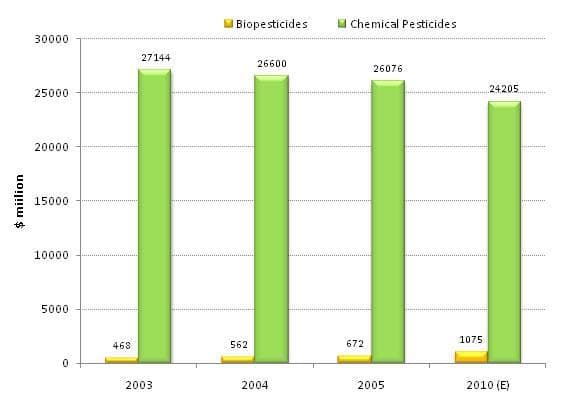
A comprehensive review of the global and Indian biopesticide scenario — market growth, regulatory support, microbial and biochemical classes, and the factors that continue to restrict wider adoption of biological pest control.
भुईमूग पिकावर शेंगा पोखरणाऱ्या किडीचे (वायर वर्म) व्यवस्थापन
डॉ. पी. एन. माने, डॉ. एस. जे. गहूकर व डॉ. एम. वाय. लाडोले यांचा भुईमूग पिकावरील शेंगा पोखरणाऱ्या वायर वर्म किडीच्या ओळख, नुकसान व एकात्मिक व्यवस्थापनावरील मार्गदर्शक लेख.
Insecticide Induced Oxidative Stress
A comprehensive review of how insecticides — organophosphates, pyrethroids, organochlorines, IGRs, and even bio-insecticides like Bt — induce oxidative stress in insects and non-target organisms through ROS generation, lipid peroxidation, and antioxidant depletion.
Efficacy of Copper Nanoparticles on Larval Mortality of Spodoptera litura
Research study evaluating the larvicidal efficacy of copper nanoparticles (CuNPs) at concentrations of 10–500 ppm against Spodoptera litura using leaf dip and larval dip methods, conducted at Dr. PDKV Akola during 2023–24.
Chitinase from Trichoderma asperellum as a Biocontrol Agent Against Spodoptera litura
Explore how metabolites of Trichoderma asperellum containing chitinase enzyme can serve as an effective biocontrol agent against the destructive tobacco caterpillar Spodoptera litura, offering a safer alternative to chemical pesticides.
A Novel Formulation of NPV: Overcoming UV Degradation to Boost Baculovirus Efficacy
Nuclear Polyhedrosis Viruses (NPVs) are among the safest and most target-specific biocontrol agents, but their field use is severely limited by UV inactivation. Discover the novel formulation strategies being developed to protect NPV from sunlight and enhance its persistence as a field-ready biopesticide.
Tritrophic Interaction in Plant Defense: How Crops Enlist Nature's Allies
Understand how plants engage in complex tritrophic interactions with herbivores and their natural enemies. This ecological framework reveals how crops can recruit predators, parasitoids, and pathogens as biological defenders — and why it matters for modern IPM.
Future of Eco-Friendly Pest Management
Explore the future of eco-friendly pest management: nano-biopesticides, RNA interference, AI-driven decision support, precision drone applications, and the policy and education investments needed to make sustainable pest control universal.
Protecting Sunflower Crops from Major Insect Pests
A practical guide to identifying and managing major insect pests of sunflower — including Helicoverpa armigera, Thrips palmi, Aphis gossypii, and Bemisia tabaci — using integrated, eco-friendly pest management strategies.
Emerging Trends in Agricultural Entomology
Discover the technologies reshaping agricultural entomology: AI-powered pest detection, drone-based biocontrol delivery, RNA interference, nanotechnology, and climate-smart pest management strategies for the next decade.
Sustainable Agriculture and Farmer Profitability
Explore the economic case for sustainable agriculture. Discover how IPM and biopesticide adoption reduces input costs, preserves soil health, and opens premium markets — making eco-friendly farming as profitable as it is responsible.
The Science Behind Chitinase-Based Pest Control
Dive deep into the molecular science of chitinase-based pest control. Understand insect cuticle structure, enzyme mechanisms, the role of Trichoderma and Bacillus chitinases, and the latest research on nano-formulated chitinase preparations.
Biological Alternatives to Chemical Pesticides
Explore the main biological alternatives to chemical pesticides, including entomopathogenic fungi, bacteria, parasitoids, and botanical insecticides. Learn how these agents can be combined for effective, eco-friendly pest management.
Integrated Pest Management for Oilseed Crops
A comprehensive guide to Integrated Pest Management (IPM) for soybean, sunflower, groundnut, and sesame crops. Learn how IPM combines biological, cultural, and targeted chemical controls to reduce yield losses and input costs sustainably.
How Insect Pests Reduce Crop Yield
Understand the direct and indirect ways insect pests damage crops and reduce yield. Learn about economic thresholds, major pest species in oilseed crops, and why early monitoring is the most cost-effective pest management strategy.
Understanding Chitinase: Nature's Tool for Pest Control
Learn how chitinase enzymes target insect exoskeletons to provide precise, eco-friendly pest control. Explore the science of chitin degradation, key microorganisms involved, and the agricultural applications of chitinase-based biopesticides.
Why Biopesticides Are the Future of Sustainable Farming
Discover why biopesticides are revolutionizing sustainable farming. Learn how these natural pest control agents protect crops, preserve ecosystems, and boost farmer profitability without the hazards of chemical pesticides.